

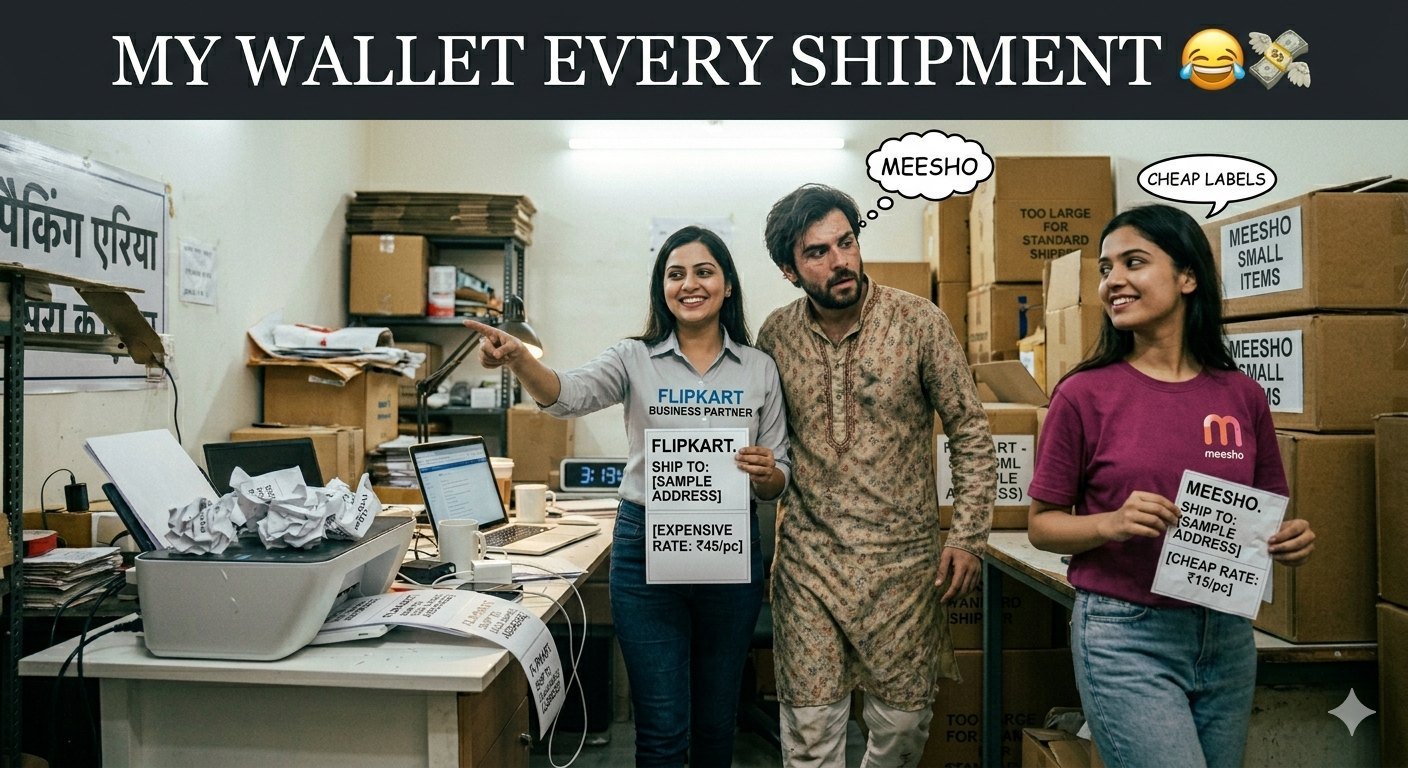
Every growing online seller on platforms like Meesho, Flipkart, and Amazon eventually faces a crucial capital expenditure decision: should you continue using an existing office laser or inkjet printer with paper sheets and tape, or invest ₹4,000 to ₹8,000 in a dedicated 4x6 direct thermal label printer?
This guide provides an objective, numbers-driven analysis of initial equipment costs, recurring consumable expenses, packaging speed, and operational durability to help sellers determine the exact point where transitioning to thermal printing makes financial sense.
Core Technology Differences Explained
Laser printers use electrostatic drums and powdered toner melted onto standard paper at high temperatures. In contrast, direct thermal printers use a heated printhead that activates chemically treated heat-sensitive paper without any toner, ink cartridges, or ribbons. This mechanical simplicity means thermal printers have fewer moving parts, zero ink jams, and instant startup times.
| Expense Component | Standard Laser Printer (A4 Paper + Tape) | Direct Thermal Printer (4x6 Adhesive Roll) |
|---|---|---|
| Initial Hardware Cost | ₹12,000 – ₹18,000 (Multi-function) | ₹4,500 – ₹7,500 (Dedicated 4-inch Thermal) |
| Paper / Label Cost | ₹250 (1 ream A4 75 GSM paper) | ₹400 (2 rolls of 500 4x6 labels) |
| Consumable Cost (Toner / Ink) | ₹600 – ₹900 (Compatible toner cartridge) | ₹0 (Zero ink, zero toner, zero ribbon) |
| Adhesive / Taping Cost | ₹200 (4 rolls of transparent BOPP tape) | ₹0 (Labels are pre-glued peel-and-stick) |
| Total Monthly Consumables | ₹1,050 – ₹1,350 | ₹400 |
| Cost Per Shipping Label | ₹1.05 – ₹1.35 | ₹0.40 |
| Average Packing Time per Parcel | 45 – 60 seconds (Cutting, taping) | 8 – 12 seconds (Peel and stick) |
Break-Even Calculation for Indian Sellers
At an average savings of ₹0.75 per label on consumables alone, a thermal printer costing ₹5,500 pays for itself after approximately 7,300 labels printed. For a seller dispatching 30 orders per day (900 orders per month), the capital expense is fully recovered in approximately 8 months. When factoring in labor time savings (saving 35 seconds per parcel equates to nearly 9 hours of manual labor saved per 1,000 orders), the practical break-even occurs in under 4 months.
Durability Under Indian Weather and Logistics Conditions
Courier logistics in India involve multiple sorting hubs, open loading docks, and extreme monsoon humidity. Standard inkjet labels smudge immediately when exposed to rain, while laser toner can crack or flake off when polybags flex. High-quality top-coated direct thermal labels resist water splashes, surface abrasion, and grease, ensuring barcodes remain readable from initial pickup to final customer doorstep delivery.
Comments (0)
Log in to join the discussion.