

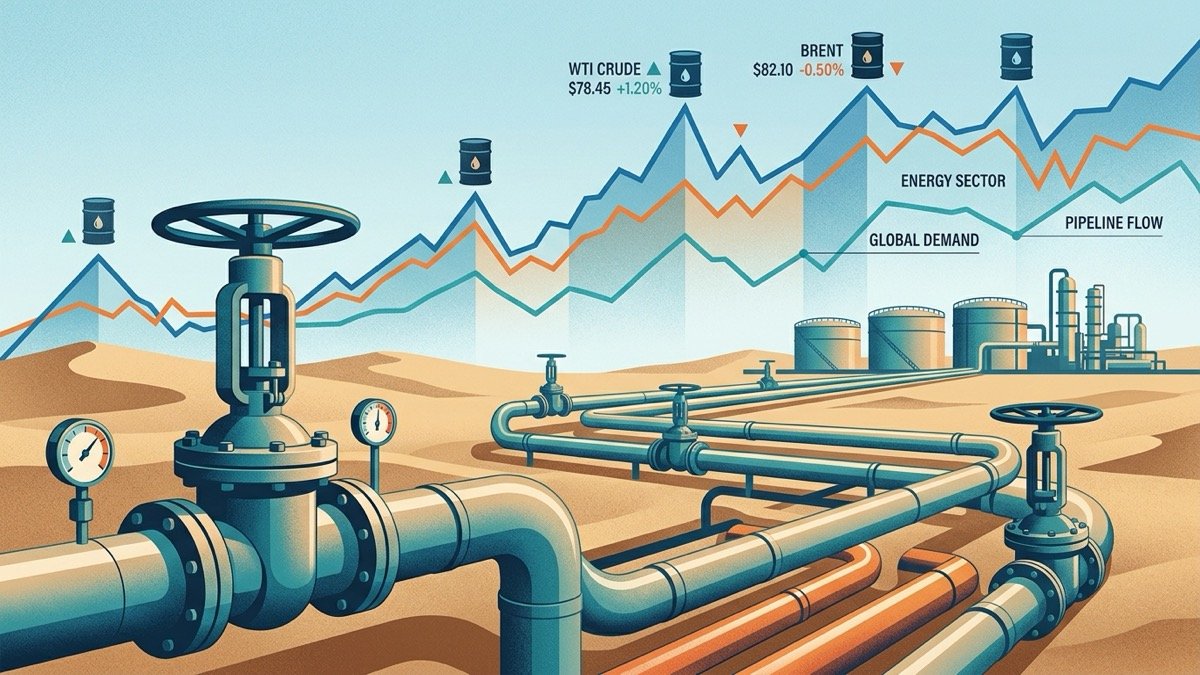
International crude oil benchmarks crossed critical psychological barriers in Asian and European trading, driven by deepening supply concerns following the closure of Saudi Arabia's main East-West Pipeline. Brent crude futures gained $1.24 to trade at $106.93 per barrel, while U.S. West Texas Intermediate (WTI) rose $1.29 to $102.65 per barrel.
The price escalation reflects heightened vulnerability in Middle Eastern energy distribution channels. The 1,200-kilometer Petroline, which connects crude gathering centers in Abqaiq to the western port of Yanbu on the Red Sea, was halted as a precautionary measure after drone attacks damaged key pumping stations.
Strategic Role of the Petroline Conduit
The East-West Pipeline is a cornerstone of global energy security because it allows Saudi crude to bypass the narrow Strait of Hormuz. With commercial tanker navigation through maritime choke points already subdued by regional naval alerts, the inability to divert five million barrels per day across the Arabian Peninsula has severely tightened spot supply.
| Metric / Asset | Current Price / Capacity | Prior Week Baseline | Market Impact Assessment |
|---|---|---|---|
| Brent Crude Futures | $106.93 / barrel | $98.40 / barrel | +8.6% surge driven by Gulf supply risks |
| WTI Crude (US) | $102.65 / barrel | $94.20 / barrel | +8.9% increase affecting refinery input costs |
| Petroline Daily Throughput | 0 MBD (Temporary shutdown) | ~5.0 MBD normal capacity | Forces maritime rerouting through contested choke points |
| Red Sea Tanker Insurance | +45% risk premium | Standard marine rate | Elevates landed freight costs for Asian importers |
Impact on Inflation and Global Refineries
Refiners in India, Japan, and South Korea have begun assessing alternative crude supplies from West Africa and the United States, driving premiums for non-Gulf light sweet grades. Economists warn that sustained crude prices above $100 per barrel will complicate monetary policy decisions for central banks struggling to bring headline inflation down toward targets.
Engineers from Saudi Aramco are currently conducting ultrasonic metal integrity inspections along the affected pipeline sections. Industry estimates suggest full operational throughput could take three to five weeks to restore, though limited partial pumping may resume sooner.



Comments (0)
Log in to join the discussion.